water chestnut
Trapa natans
Family: Lythraceae
Other Scientific Names:
Trapa bicornus
Other Common Names: bull nut
Weed class: noClass
Native to: Parts of Europe, Asia, and Africa
Is this Weed Toxic?:
Not known to be
Legal listings:
This plant is on the quarantine list. It is prohibited to transport, buy, sell, offer for sale, or distribute plants or plant parts of quarantined species into or within the state of Washington or to sell, offer for sale, or distribute seed packets of seed, flower seed blends, or wildflower mixes of quarantined species into or within the state of Washington. Please see WAC 16-752 for more information on the quarantine list. For questions about the quarantine list, contact the Washington State Department of Agriculture's Plant Services Program at (360) 902-1874 or email PlantServices@agr.wa.gov.
Why Is It a Noxious Weed?
Water chestnut is not listed as a noxious weed but is on the quarantine list.
How would I identify it?
General Description
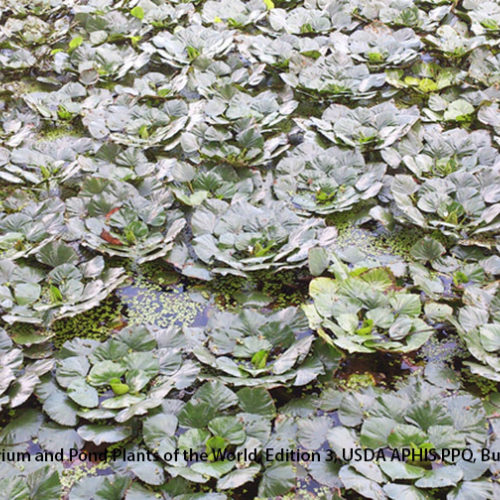
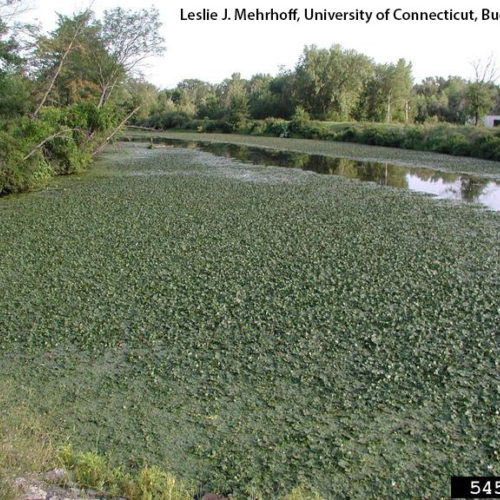
This annual aquatic plant floats on the surface, with its long stem growing thorugh the water into substrate. They grow in rosettes, and can cover a water area easily.
Flower Description
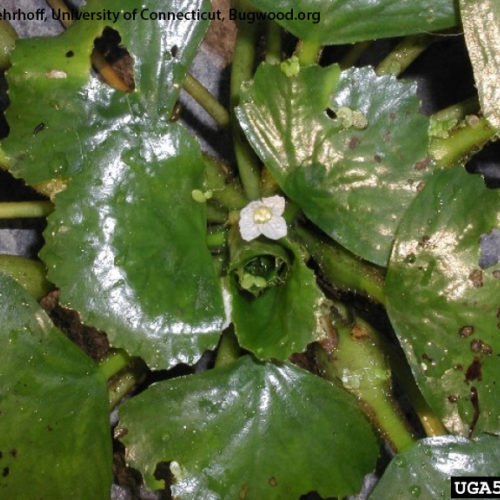
4 white petals, and relatively small
Leaf description
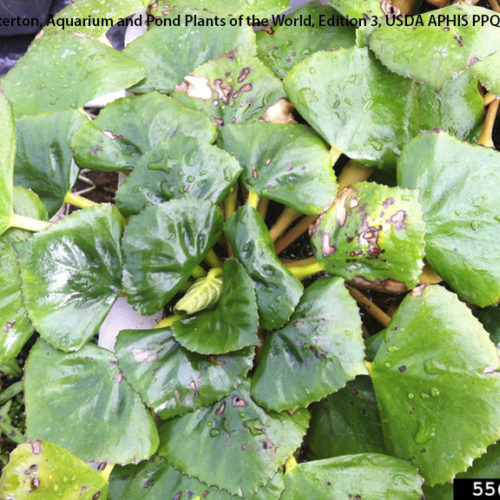
Rosettes of square to diamond shaped leaves on stems fan out from the center. Each leaf is toothed on the 2 far edges. The rosettes float on the water surface.
Stem description
The stem grows completely underwater, and can exceed 12 feet, to get the rosette of leaves to the top of the water
Fruit Seed Description
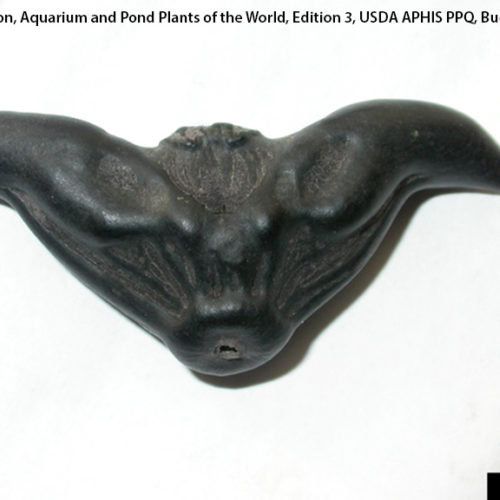
Large, starchy, and hard pods start green and ripen to black or dark brown. They are 4 sided, each side having a lare spine. They can be over 2 inches wide, and can remain viable for 12 years.
Where does it grow?
Aquatic areas like lakes and rivers. Prefers nutrient rich areas.
How Does it Reproduce?
Seeds can remain viable for 12 years
How Do I Control It?
Specialized control is required due to aquatic herbicide regulations, how long the seeds are viable, and how long the stems can grow.
For More Information
New York Invasive Species Information on water chestnut.